Investing in a Private Student Dormitory — What Is the PBSA Sector and How Does It Work?
The PBSA (Purpose-Built Student Accommodation) sector in Poland — structural undersupply, ~100% occupancy, 13,195 beds across 33 properties. Savills 2025 data.
If you are interested in real-estate investing, you are probably thinking about a buy-to-let apartment. That is the natural instinct — the residential market is familiar and has long been the default route to passive property income in Poland.
But there is a segment drawing more and more capital — both individual and institutional. It is investing in a private student dormitory, i.e. the PBSA (Purpose-Built Student Accommodation) sector.
What is the PBSA sector?
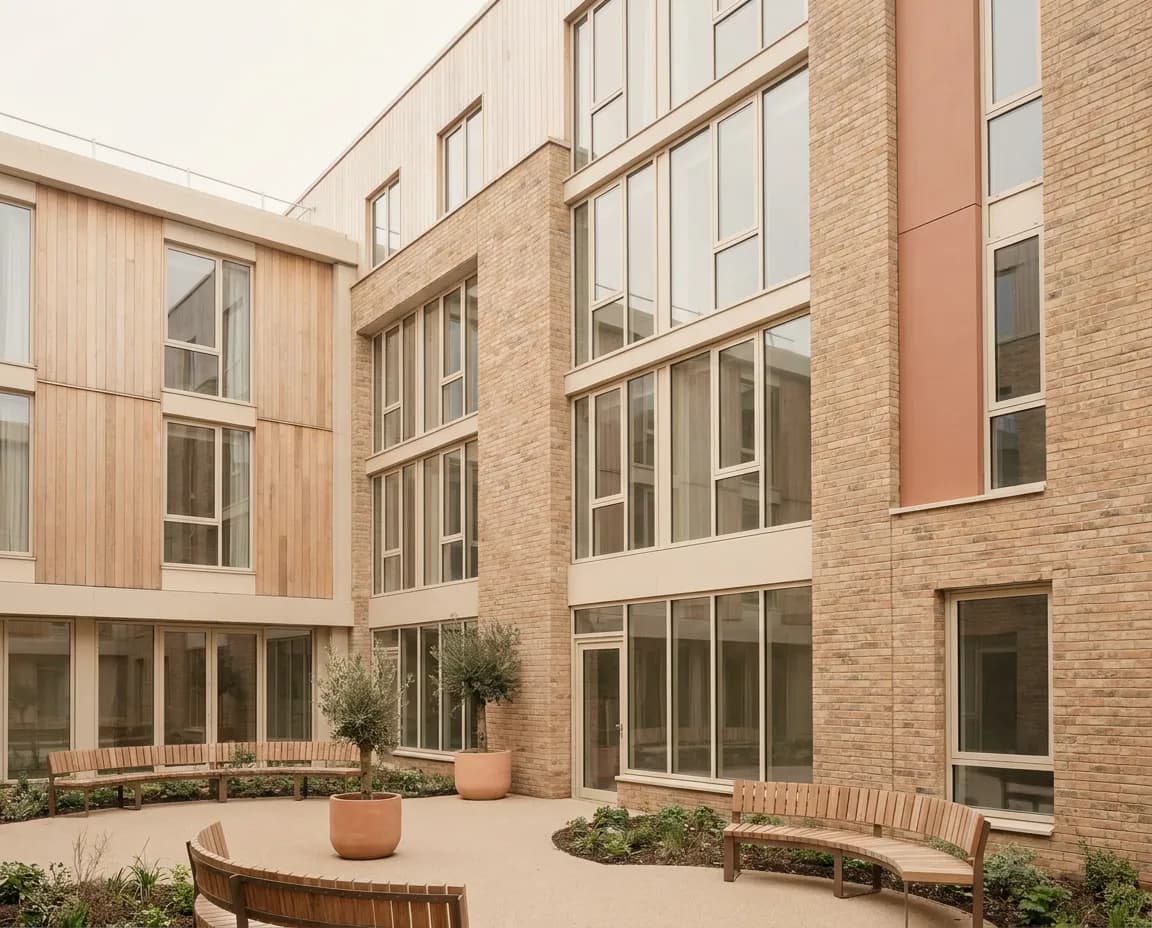
PBSA is a residential property designed specifically with students in mind and run by a professional operator. The investor acquires a unit (a room, a studio, or a stake in the project), which is then let to students by the operator.
The model is simple:
- The investor buys a unit in a PBSA property
- The operator runs the property — recruits tenants, collects rents, handles technical and administrative service
- The investor receives regular income from the rent — with no need to personally manage the property
This is a fundamental difference from the classic buy-to-let apartment, where the owner usually has to find the tenant, deal with repairs, and handle the accounting themselves.
Who is the tenant — and why does it matter?
The tenants in private dormitories are students — both Polish and international. This is not a random segment.
Poland has 1.28 million students according to GUS data for the 2024/2025 academic year and is the fifth-largest student market in the EU according to the Savills report. That number is rising steadily. International students — 108,600 people (8.6%) — have a considerably higher propensity to choose PBSA than Polish students, owing to language barriers, the lack of a local support network, and a preference for booking online in English.
A key metric: only about 10% of Polish students have access to a dormitory (public or private). In modern private dormitories — just 1%, according to the Savills report "Rynek PBSA w Polsce 2025" (The PBSA Market in Poland 2025).
For comparison — Western European countries record dormitory-access rates above 20%. The structural undersupply is the bedrock of the PBSA market in Poland.
How does the earnings model work?
Rental income. Tenants pay a monthly rent. The operator takes a management fee, and the remainder goes to the investor. Rates in private dormitories are set by the free market — there are no rent controls in Poland.
Property value appreciation. Like any property, a PBSA unit can gain value over time. Rising demand and still-limited supply favour growth.
Occupancy. Modern private dormitories reach occupancy of up to 100% during the academic year, whereas university halls record occupancy below 72% (according to Savills 2025). For the investor this means minimal vacancy risk.
Entry models into the PBSA market
1. Buying an individual unit. The investor buys a specific room or studio in a property and signs a management agreement with the operator. Similar to buying a buy-to-let apartment, but with a built-in operator.
2. A stake in a development project. The investor takes part in financing the construction or refurbishment of a PBSA property and, once it is up and running, earns a return from rent or from a buy-out.
3. A fund or SPV. For investors who prefer a diversified approach — the option to invest through fund structures or special-purpose vehicles (SPVs) that hold portfolios of properties.
Who is already investing in PBSA in Poland?
The PBSA market in Poland is still a niche, but it is attracting serious players:
- Xior Student Housing (the Basecamp brand) — 7 properties in Poland
- Kajima Student Housing (the Student Depot brand) — 8 properties
- Zeitgeist Asset Management (the Zeitraum brand) — 3 properties in Warsaw and Kraków
- Golub GetHouse (the LivinnX brand) — 2 large properties (Warsaw Praga-Północ + Kraków Zabłocie)
- Signal Capital Partners, Griffin Capital Partners, Echo Investment — the StudentSpace platform (2 properties in Kraków)
- 1 Asset Management (SHED Living) — 2 properties (Warsaw Sky Living + Kraków)
- Tribera Living (after rebranding from Milestone) — 2 properties in Wrocław
In total, by the end of 2024 investors had placed EUR 310 million into the PBSA market in Poland (cumulative capital, Savills 2025). The 2024 volume alone amounted to EUR 30 million in a single transaction — a year of low activity. 2025 stands a chance of being a record year — in the optimistic scenario the volume could exceed EUR 200 million.
What sets a dormitory investment apart from a buy-to-let apartment?
| Feature | Buy-to-let apartment | PBSA |
|---|---|---|
| Management | Self-managed or via an agency | Professional operator |
| Occupancy | Variable, gaps of 1-2 months/year | ~100% during the academic year |
| ROE (LTV=0%, Warsaw) | 3.3% (NBP Q3 2024) | Higher at full occupancy |
| ROE (LTV=50%, Warsaw) | -1.3% (NBP Q3 2024) | — |
| Investor involvement | High | Low (hands-off model) |
| Rent controls | None in Poland | None in Poland |
| Liquidity | Good | Secondary market developing |
For a comparison of the full profitability of an apartment — see our NBP Q3 2024 analysis.
Market development pipeline
According to the Savills 2025 report, the Polish PBSA market is in an expansion phase:
- 13,195 beds across 33 modern PBSA properties currently in operation
- 4,100 beds under construction across 10 projects (2024 status)
- +9,000 new beds planned by 2028 (Savills)
- In total, private investors are adding 15,700 beds in active projects
The market will therefore more than double over the next 3-4 years. It is simple supply-and-demand arithmetic: 1.28 million students, 1% in PBSA — even doubling the supply will not satisfy the structural demand.
Summary
Investing in a private dormitory is a model built on structural supply shortage (10% access to any dormitory, 1% to PBSA) and rising demand (1.28 million students, a forecast of 1.4 million by 2030). A professional operator takes over management, and the investor receives regular rental income at high occupancy.
It is an increasingly popular asset class — both in Poland and across Europe. But it remains a niche segment that requires understanding the specifics of the operator and the terms of the agreement.
Sources
- Savills — Rynek PBSA w Polsce 2025 (The PBSA Market in Poland 2025)
- NBP — Informacja o cenach mieszkań Q3 2024 (Report on Housing Prices, Q3 2024)
- GUS — Szkolnictwo wyższe w roku akademickim 2024/2025 (Higher Education in the 2024/2025 Academic Year)
- Operator websites (audit 2026-05-28)
Full citations available in data/sources.md.