The 10 Most Common Mistakes When Choosing a Dormitory — What to Avoid
A list of the typical mistakes students make when choosing a private dormitory. From booking too late to skipping the contract review. What's worth knowing from experience.

Choosing a dormitory is a decision for 10–12 months. Students who get it wrong here often suffer all year or have to move mid-semester. We've gathered the 10 most common mistakes worth knowing before you sign a contract.
1. Booking too late
The mistake: Putting off your booking until August/September.
The consequences: The best properties are full. What's left is more expensive, lower quality, or in a worse location. Sometimes there's no choice of room type — singles unavailable, only twin shared.
The fix: Book in May–June. Some operators offer early-bird discounts of 5–10% for early booking.
2. Choosing on price alone
The mistake: The cheapest option wins, regardless of location and standard.
The consequences: A 30-minute commute, no security, poor internet — it hits your daily quality of life.
The fix: Calculate the full cost, including commute time (the price of time = the value of time). A dormitory at PLN 1,500 with a 40-minute commute can be more expensive "in real life" than PLN 2,200 with a 10-minute commute.
3. Not checking the house rules
The mistake: You sign the contract without reading the property's house rules.
The consequences: After moving in, you discover that:
- Overnight guests are banned (a problem for a partner)
- Pets are banned (your hamster has to stay with your parents)
- Quiet hours start at 9 pm (not 10 pm as you assumed)
- Smoking is banned, even on the balcony
The fix: Read the house rules before you sign. If the operator won't show them before the contract — that's a red flag.
4. Ignoring the location in the evening
The mistake: You check the location only during the day. In the evening it turns out the street is dark, unsafe, or very quiet (empty evenings = no neighbourhood life).
The consequences: Uncertainty about getting home late in the evening from the library / class / work.
The fix: Visit the area in the evening before signing (or check Google Street View at night, if available). Check reviews on student forums.
5. Not verifying the room's furnishings
The mistake: The marketing brochure shows a beautifully furnished room. Reality — the furniture is bare minimum, the mattress is old, the cooker has 2 burners.
The consequences: You have to buy a mattress, a blanket, a lamp. That's an extra PLN 500–1,000.
The fix: Ask for actual photos of the current room (not marketing shots). Ideally with a virtual tour or a physical visit. Ask outright about the condition of the furnishings.
6. Not reading the contract
The mistake: You sign the contract without reading the clauses.
The consequences:
- Leaving early costs 3 months' rent
- The operator may enter the room at any time
- Annual rent indexation of +8% (not +3% as you thought)
- No refund of the booking fee if you're not admitted to your course
The fix: Read the contract line by line. Unclear clauses — ask the operator.
7. No condition report appendix
The mistake: You move in, but there's no document describing the room's condition.
The consequences: When you move out, the operator claims that a stain on the wall / a crack in the wardrobe / a scratch on the floor is your fault. They deduct compensation from your deposit.
The fix: Always ask for a handover report with photos of the condition on move-in day. If the operator doesn't have one — make it yourself and email it to the administration address.
8. Choosing a property without checking reviews
The mistake: You trust only the operator's website.
The consequences: After moving in, you discover the washing machine is constantly broken, the internet drops, security is asleep, and the administration doesn't reply to emails.
The fix: Check reviews:
- Google Reviews (the most reliable)
- Student Facebook groups ("Akademik [city]", "Studenci [university]")
- Akademiki.pl, Opinieouczelniach.pl (specialist portals)
- Reddit r/Krakow, r/Warszawa (English-language comments from international students)
Read the negative reviews especially carefully — they reveal the real problems.
9. Packing everything from home
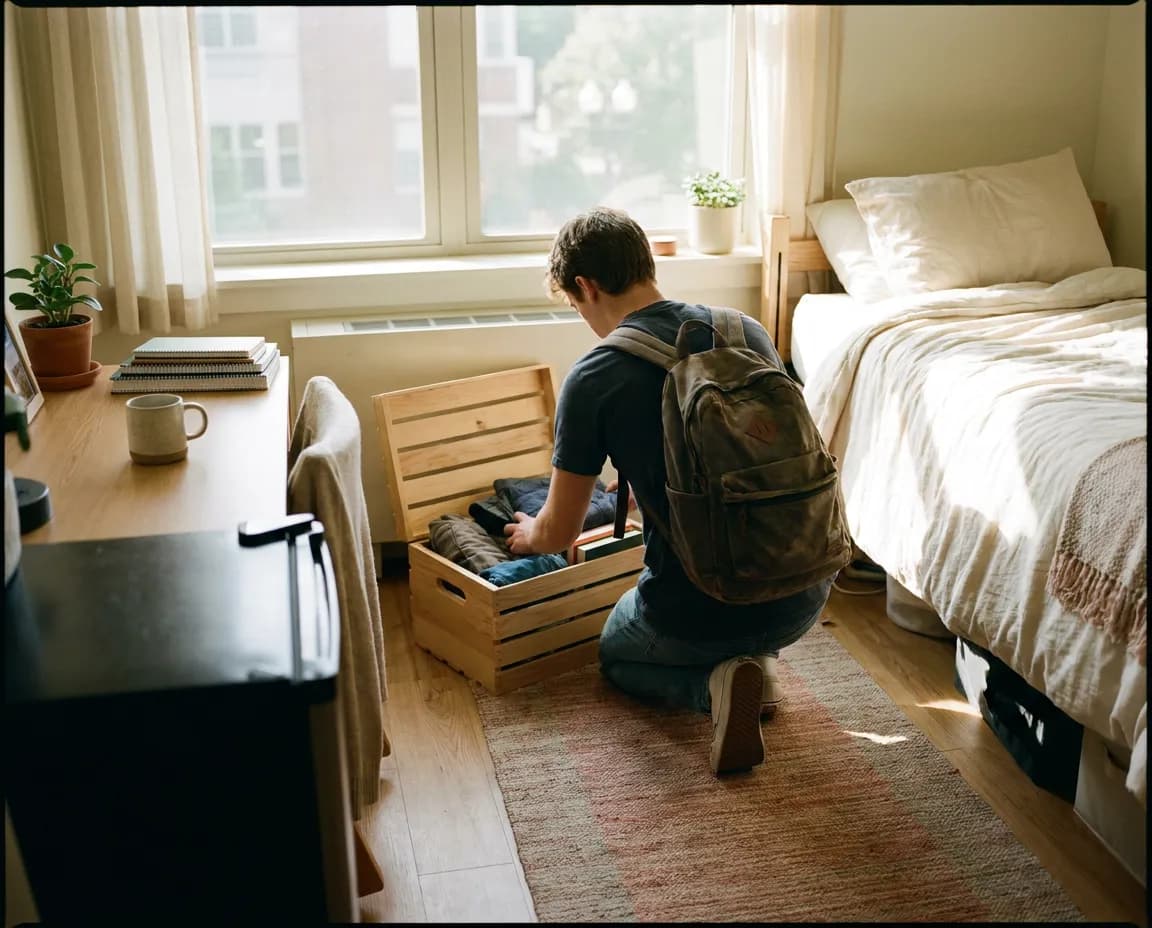
The mistake: You pack a microwave, a kettle, a coffee machine, rugs, books, 5 sets of bedding.
The consequences: An 18–20 m² room won't fit everything. You have to take things back, buy smaller ones, make do.
The fix: See our guide on what to take to a dormitory. Pack the minimum — you can buy anything missing once you're there.
10. Ignoring the property's social vibe
The mistake: You choose a property without checking who lives there. It turns out it's mostly 35-year-old freelancers — and you were looking for a student atmosphere.
The consequences: You feel out of place. No chance to make student connections.
The fix: Ask the operator outright: what's the property's demographic? The percentage of students vs young professionals? Which university dominates? The average age?
Bonus #11 — thinking of the dormitory as "temporary"
A dormitory isn't a "temporary fix". It's your home for 10–12 months. It's worth taking the choice seriously — it affects your daily life, your well-being, your studies, and your friendships.
Bonus #12 — no plan B
The mistake: One option, no plan B.
The consequences: If your chosen property turns you down (full, application issues) — you're left with no plan.
The fix: Always have 2–3 options. Provisionally book 1–2 properties (if the contract allows) and make the final decision after comparing.
Conclusion
Choosing a dormitory is a decision based on many factors, not just price. Location, standard, house rules, operator, neighbours — it all matters.
The most common mistake: treating the choice like an impulse decision (an evening click on "book now"). The best mindset: treating it as an investment in 10 months of student life.
Read through our database of 35 properties across 9 cities and compare before you sign anything.