Student Housing for Medicine and Engineering Students — Where to Study in Poland
Medicine and engineering are demanding degrees. What makes the ideal dormitory for these courses. Top properties per university.
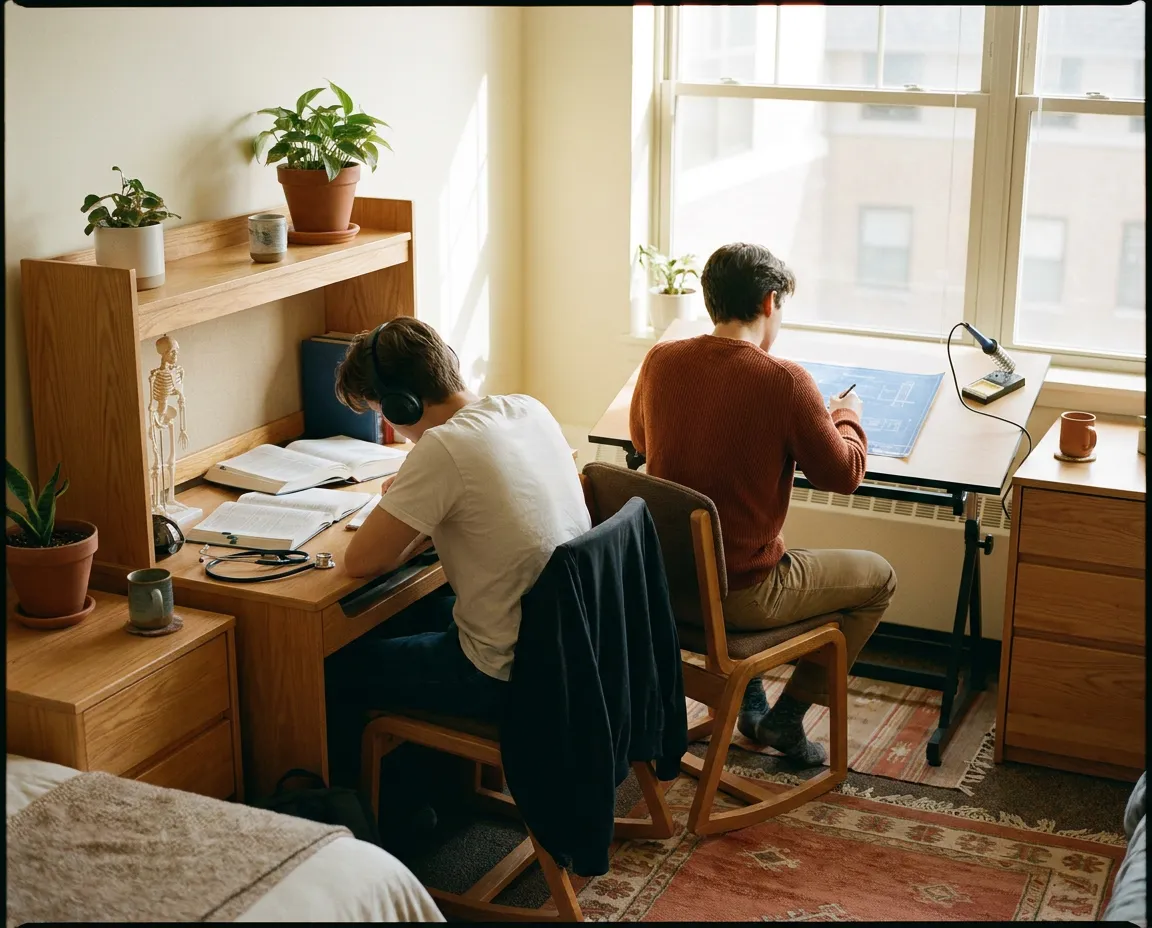
Medical and engineering degrees are exceptionally demanding — 30–40 hours of classes per week + 20–30 hours of independent study + clinical or lab placements. That calls for a carefully chosen place to live.
This guide covers what to look for, plus specific recommendations per university.
What a student on an intensive course needs
Quiet for studying. Exam season in medicine or engineering means 8–14 hours of study a day for 3–4 weeks. You simply can't do it without quiet.
Reliable internet. Online lectures, access to medical databases (PubMed, Scopus), e-learning platforms. No Wi-Fi means no studying.
Somewhere to cook. No time for restaurants. A shared kitchen or your own kitchenette matters.
Good lighting. Eight hours reading anatomy — you don't want to strain your eyes under poor light.
A location close to campus. Every minute of commuting is a minute less for studying. A 10-minute walk is ideal.
A shared study area. Most PBSA properties have a "study lounge" — somewhere you can study with a group and go over material together.
Per university — the best properties
Medical University of Warsaw (WUM)
- SHED Sky Living Warszawa (Żwirki i Wigury 31, Ochota) — a 5-minute walk to WUM. Coworking area, gym, 1 Gb/s internet. 733 beds, an international community.
- Student Depot Warszawa Suwak — Mokotów, 15 minutes by public transport
Medical University of Gdańsk (GUMed)
- Student Depot Gdańsk (Kołobrzeska 36, Przymorze) — a longer commute to the medical campus (15–20 min)
- Collegia Sobieskiego (Sobieskiego 1, city centre) — a shorter commute to GUMed
Pomeranian Medical University in Szczecin (PUM)
- Hussar Loft (Gumieńce) — a direct connection to PUM, 75 single-occupancy apartments
Medical University of Lublin (UM, English Division)
- Student Depot Lublin (Doktora Witolda Chodźki 13) — close to the medical campus, popular with English Division students
Wrocław University of Science and Technology (PWr)
- Tribera Wrocław Ołbin (Bolesława Prusa 9) — close to the Faculty of Architecture
- Basecamp Wrocław (Sienkiewicza 18/22) — city centre, public transport to PWr
Lodz University of Technology (PŁ)
- Basecamp Łódź Rembielińskiego (Rajmunda Rembielińskiego 16/18) — a 10-minute walk to PŁ
- Student Depot Łódź Wigury — a short ride by public transport
AGH Kraków
- Basecamp Kraków (Krowodrza) — a 3-minute walk to Frycz Modrzewski, close to AGH
- SHED Co-living Kraków (Aleja 3 Maja 51A) — by the Błonia meadows and AGH
- Next Door Housing (3 Maja 47B) — likewise
Poznań University of Technology (PP)
- Student Depot Polonez (Al. Niepodległości 36) — city centre, close to PP
- The Eagle (Al. Niepodległości 6) — 4 minutes to UE, a short distance to PP
Practical tips for medical students
Group anatomy. Most medical students learn anatomy in groups of 3–5. Check whether the property has rooms for group study (usually yes).
A printer. Anatomy atlases, study materials — often worth printing. An in-house printer (with a per-copy charge) saves a trip to a print shop in town.
On-call shifts. Medical students have hospital shifts, sometimes at unusual hours. Check whether the property is accessible 24/7 (with security at the entrance).
Meals. Twelve-hour shifts require planning your food. A kitchenette in your studio means you can batch-cook in advance.
Quiet hours. Typically 10 pm–7 am. Check whether the property enforces the house rules — noisy neighbours are a nightmare for a medical student.
Practical tips for engineering students
A second monitor. Programming, CAD, engineering projects — often two monitors. Check whether your studio has room for a second monitor.
Low-latency internet. IT students working on remote projects — low ping makes a practical difference. Most PBSA properties have ethernet in the room.
An A3 printer / plotter. Architecture, mechanical, and civil engineering students need A3+. Some properties (StudentSpace Kraków) have plotters. The rest rely on print shops in town.
Hackathons. Some properties have rooms you can book for an evening hackathon (Basecamp Kraków, SHED Living). Ask at reception.
What to verify when viewing a property
An ergonomic desk. Standard dimensions are 120×60 cm — enough for a laptop plus books. Some properties (Noli Studios) have 140 cm desks.
The chair. Unusually good in private dormitories (Basecamp uses Herman Miller / Hag-style chairs). Check all the same.
Desk lighting. LED is usually built in. An extra task light is worth it.
Ventilation. Eight hours of studying in a closed room — you don't want poor ventilation. Check the window plus the mechanical ventilation system.
Neighbours. Ask about the profiles of your neighbours. IT students along the whole corridor mean quiet hours and a study atmosphere. Third-year party-goers mean a different rhythm.
Conclusion
For medical and engineering students, location and quiet matter more than parties or community. A private dormitory delivers both — study zones, enforced house rules, and single rooms.
The best combination for intensive courses: a single room with a private bathroom, close to your university campus, in a property with an active study area. Check the specific per-university recommendations above.