Your Dormitory Over Summer — What Happens During the Holidays? Short-Term Rentals
Can you stay in your dormitory over summer? Some properties rent rooms short-term to tourists. What to know before the summer break.

The academic year ends in June. So what happens to your room? Will it sit empty for three months? Do you have to move out? Do you pay rent over the summer?
We look at four scenarios, depending on the operator.
Scenario 1 — an academic-year contract (10 months)
The standard is a September–June contract. After 30 June:
- You move out
- The operator inspects the room's condition
- You get your deposit back (if there was one)
- You can re-book for September on preferential terms
Operators using this model: Student Depot (most), Basecamp (most), Hussar Loft.
Scenario 2 — a 12-month contract
Some operators require a full-year contract (12 months):
- You pay over the summer, even if you go home
- You can leave your belongings in the room
- The room is yours for the whole holiday
- You can come back in August to revise material from last semester
Operators: StudentSpace (12 months), LivinnX (usually 12 months), some Zeitraum properties.
Upside: no need to pack up and move out.
Downside: you pay for 2–3 months you don't use full-time.
Scenario 3 — an operator with a summer option
Some properties offer two models in parallel:
- Academic rental (10 months, cheaper)
- 12-month rental (more expensive, but continuous)
You choose when you sign. Often you can also switch mid-way (if the operator has availability).
Scenario 4 — a summer hotel-style rental
Some properties turn into a hotel / short-term rental over the summer for tourists. Students move out on 30 June, and the operator rents the rooms to tourists in July and August.
Benefit for the operator: extra revenue during the student "off-season."
Benefit for the student: holiday rates can be lower (some properties offer summer discounts for resident students).
Operators using this model: Akademik Praski Warsaw (rooms-only model, open to tourists), Collegia Gdańsk (a dormitory–hotel mix), Zeus Apartments Lublin (a hybrid model).
What to leave, what to take
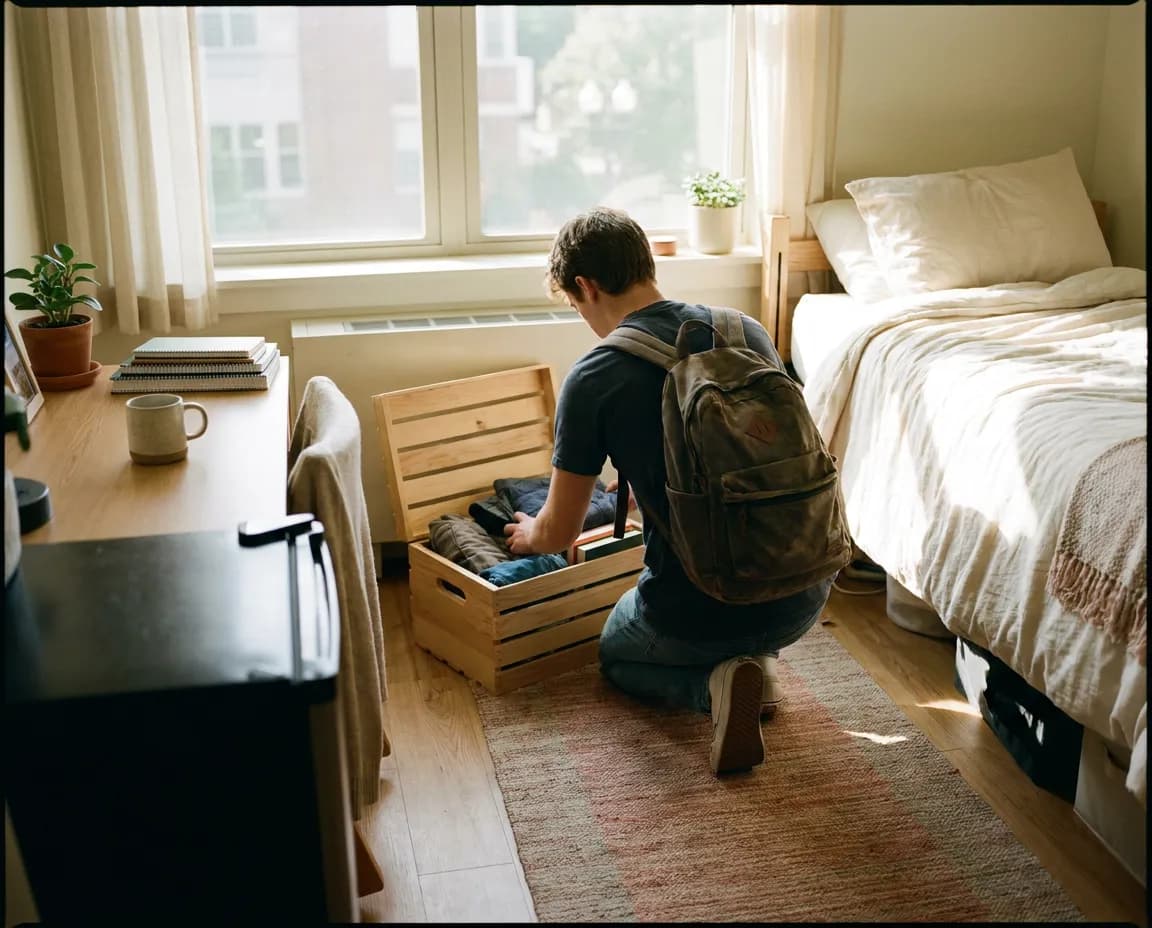
If you're vacating the room on 30 June:
Take with you:
- All clothes (if you leave them, there may be damp or mould)
- All toiletries (they can spoil)
- Valuables (laptop, documents, jewellery)
- Bedding (if it's yours, not the operator's)
Leave in the room (if the operator allows it):
- Furniture (it comes with the room)
- Indestructible items (books, posters)
What you must not leave:
- Food (fresh produce — mould)
- Liquids (water will spill, bottles will crack)
- Plants (they'll wither without watering)
Storage
Some properties offer summer storage for an extra fee:
- Boxes in the basement / a dedicated area
- Price: PLN 50–150 for the summer
- Usually 2–3 cardboard boxes
This is a good option if you study far from home and don't want to haul your things 800 km.
Summer internships / placements
If you have a summer internship in another city, it's worth renting a dormitory there for the summer. Some operators offer summer discounts for new residents (July–August, a shorter rental).
Check the properties in your internship city — they're usually available.
Summer language schools / courses
Poland has strong summer schools for international students (UJ Summer School, Warsaw Summer School, Poznań Summer School). Students on these courses need short-term accommodation — and here private summer dormitories are a good option.
September — return or a new booking
In August, check:
- Whether you have a room booked for September (if your academic year runs year-to-year)
- Whether you need a new booking
- Whether you need a different property (a change of university or course)
Popular properties fill up fast — booking in August can be hard. It's best to book for the next year in May or June.
Conclusion
Summer in a dormitory is no problem — operators have clear models:
- Move out for three months (a 10-month contract)
- Pay over the summer with the option to stay (a 12-month contract)
- A hybrid hotel–student rental
Choose your model when you sign your first contract. If you're unsure — start with the shorter one (10 months) and extend if you decide to stay.